
The Land
On Arakwal Country, within the Bundjalung Nation, River Hawk Ranch lies between Wollumbin and the sea.
Along our eastern boundary, Simpsons Creek winds beside the forests and wetlands of Tyagarah Nature Reserve. Across the land, ancient volcanic soils give way to coastal sands and wetlands, creating an extraordinary meeting place of subtropical rainforest, swamp forest, paperbark wetlands and wallum. Small changes in elevation, soil and water create remarkably different ecosystems within a relatively small area.Rainforest gives way to open forest. Paperbarks rise from seasonally inundated ground. Wallum grows on ancient coastal sands.
These landscapes meet, overlap and transition, creating edges and ecotones rich with life.
Our relationship with the land is guided by two central principles: reciprocity and reverence observing, listening and learning from natures intelligence around us.
The Landscapes
Subtropical Rainforest
Cool, shaded and richly layered, pockets of lowland subtropical rainforest rise through the land.
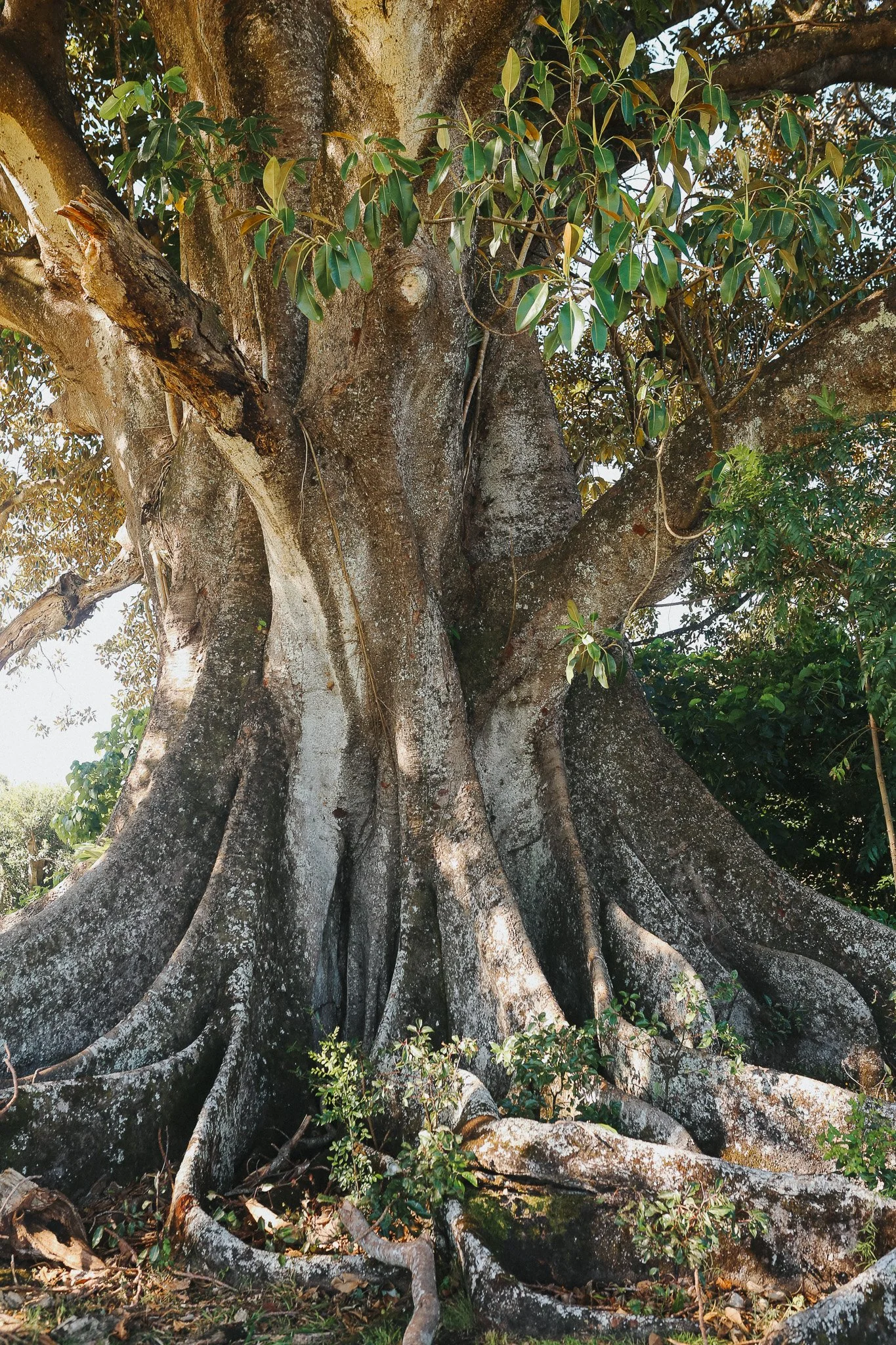
Towering figs, Cudgerie and Black Bean form the canopy, while native tamarind, Bangalow palms, native ginger, vines and ferns inhabit the layers beneath.
In one corner of the land, mature remnant rainforest remains, with great buttressed trees and epiphytic life — remnants of an ancient forest community that we are working to protect and extend.
Swamp Sclerophyll Forest
Between wetland and rainforest lies another distinctive community — swamp sclerophyll forest.
Paperbarks, swamp mahogany and swamp box rise above ferns, sedges and an emerging rainforest understory.
This is an Endangered Ecological Community, making its protection and regeneration an important part of our caring for the land.
Paperbark Wetlands
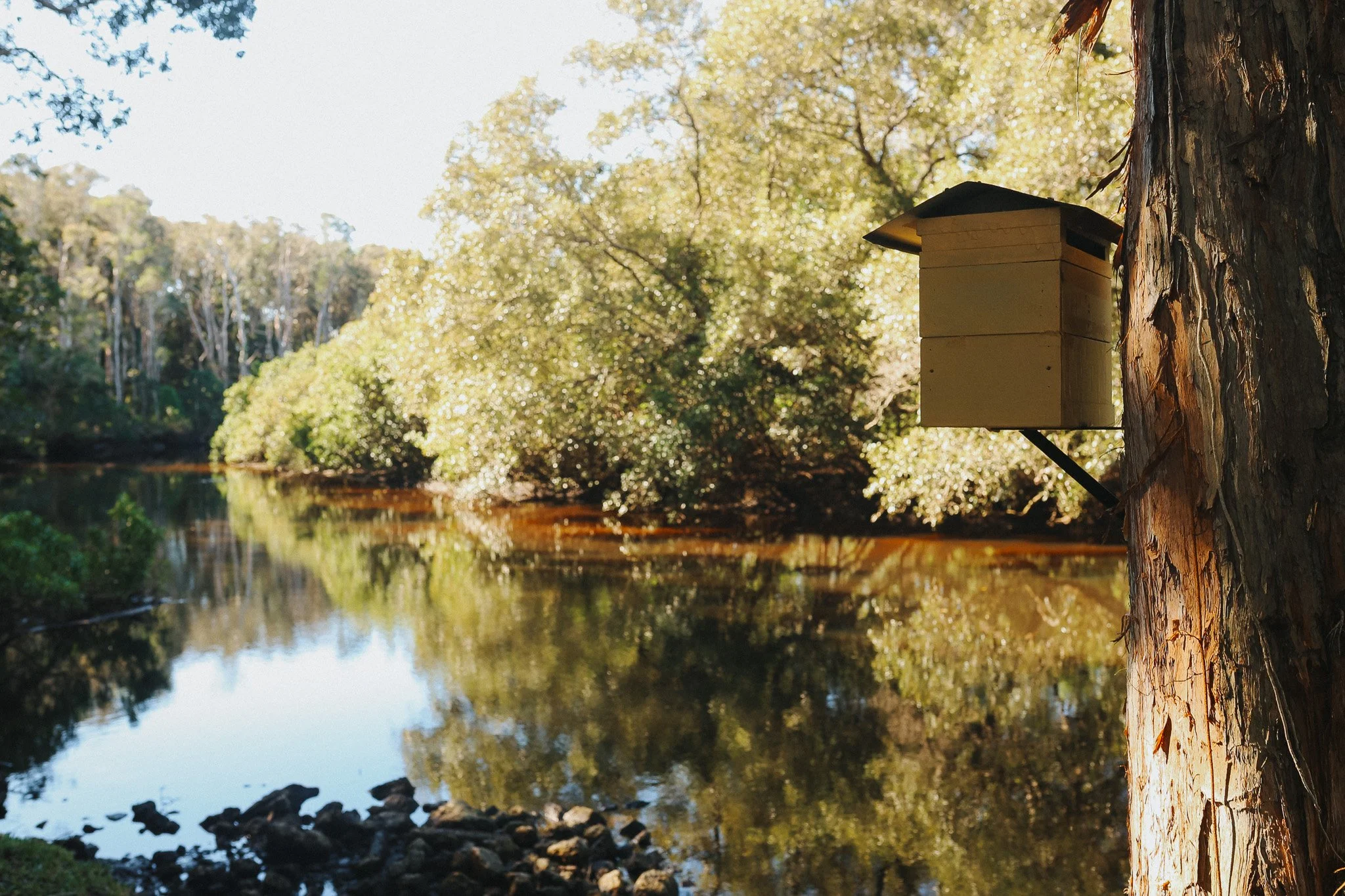
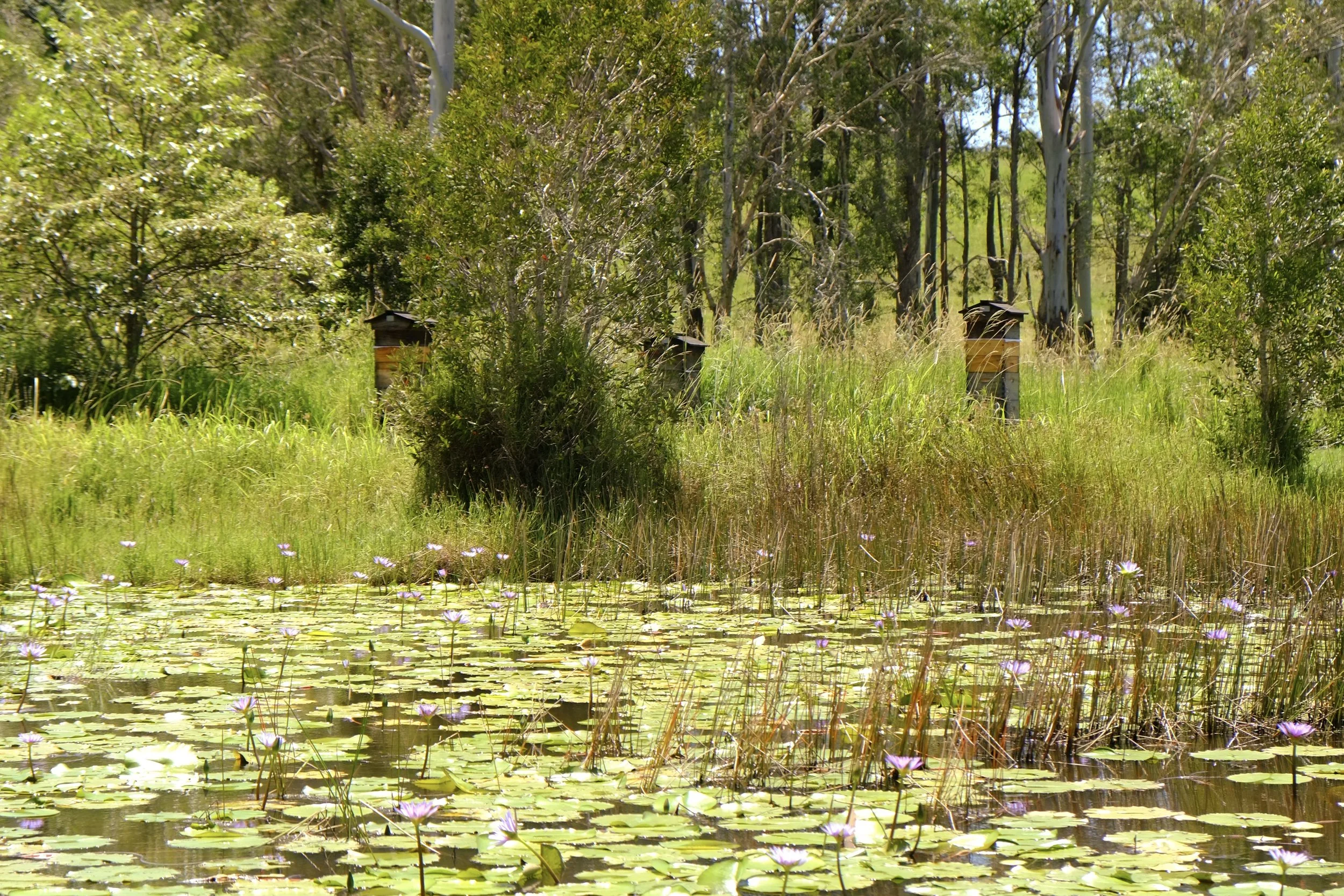
Across the lower country, water shapes the landscape. Broad-leaved paperbarks, swamp mahogany, swamp box and cabbage palms grow around seasonally inundated wetlands, creating habitat for frogs, birds, insects and other wildlife.
These places change continually with rain and water. Sometimes forest floor, sometimes wetland. For the bees, the broad-leaved paperbarks are particularly important, providing an abundant source of nectar and pollen through their long flowering periods, which ebb and flow with the rains of autumn and winter.
Across River Hawk Ranch, each landscape has its own character, relationships and role within the wider ecology. Learning to understand these different places helps us care for them with greater awareness and respond to what the land is asking of us.
Coastal Sandplain & Wallum
As the land moves towards Simpsons Creek, the soils change again. Here, on coastal sands, wallum banksias, tea trees, grasses and sedges have evolved to thrive in very different conditions from the rainforest only a short distance away.
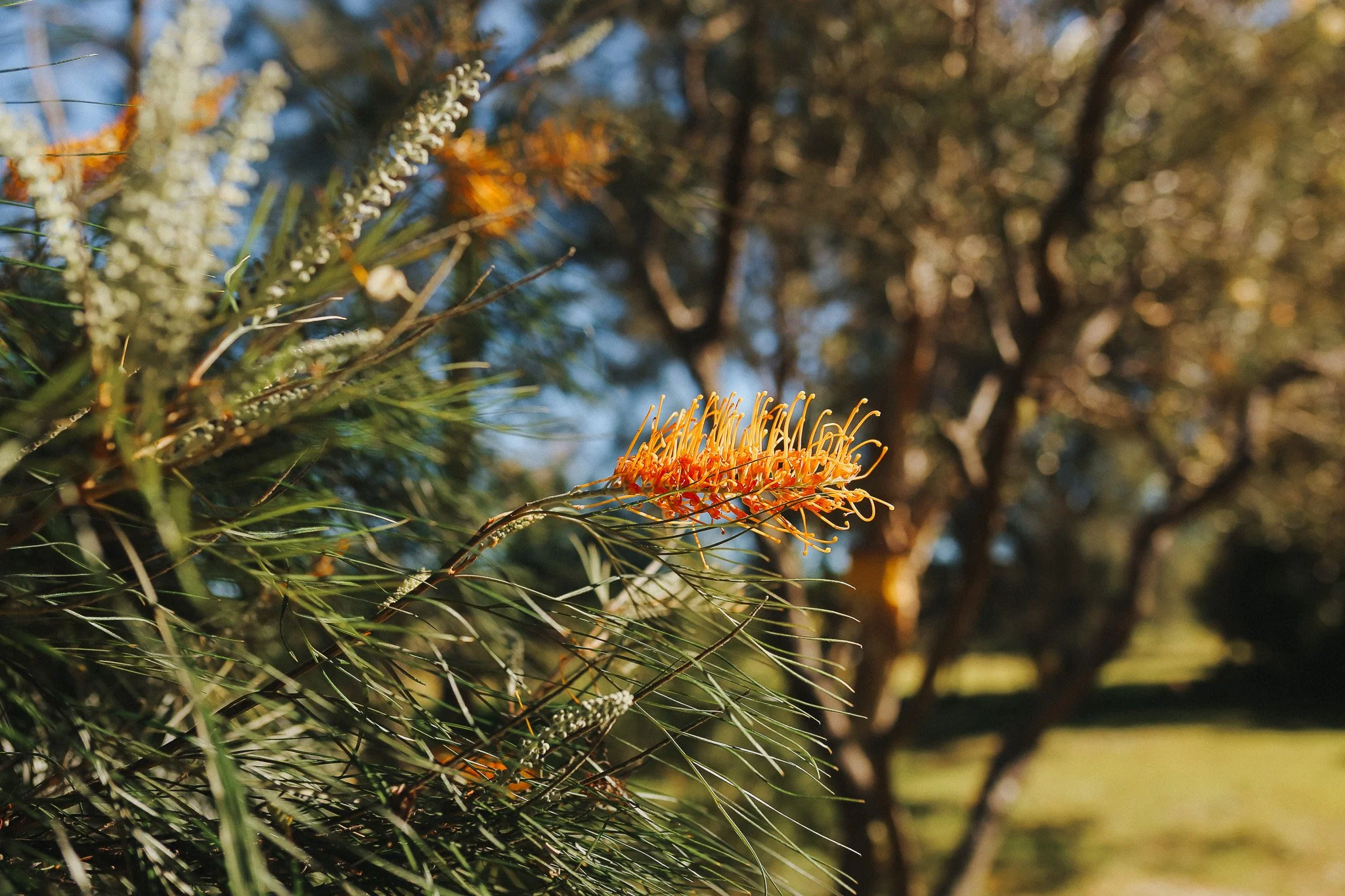
Small sand-based waterholes create another world again, including habitat for the vulnerable Wallum froglet. The surrounding wallum is also particularly important for the bees, with several naturally occurring Leptospermum species associated with high-MGO mānuka honey, alongside rich pollen sources including Banksia ericifolia, grass trees (Xanthorrhoea spp.), Dillwynia retorta and Pultenaea villosa.
Simpsons Creek
Along our eastern boundary, the land meets Simpsons Creek.
Here riparian forest, wetland and water connect River Hawk with the adjoining Tyagarah Nature Reserve and the wider Brunswick River system.
The creek and its tributaries are also recorded as a significant part of Country for Arakwal people — part of a cultural landscape extending far beyond the present day boundary.
Caring for the Land
The land is our home, the living foundation of everything we do and one of our greatest teachers.
Our relationship with the land is guided by two central principles: reciprocity and reverence observing, listening and learning form natures intelligence around us.
Reverence begins with recognising the land as living and intelligent, not simply as something to be managed or used. Reciprocity asks that the relationship be mutual: that as the land shelters, nourishes and teaches us, we consider what we can offer in return.
We care for the land following regenerative and organic principles, working with its natural systems rather than against them. Our work includes restoring native habitat, managing invasive species, protecting waterways and planting for the future.
River Hawk Ranch is Bee Friendly Farming Certified, reflecting our commitment to protecting healthy habitat and providing diverse forage for bees and other pollinators.
Fire is also part of the ecology of River Hawk, with some of the landscapes here having evolved alongside periodic fire. We are working with experienced practitioners to explore the careful use of cool mosaic burns in appropriate areas, supporting regeneration, biodiversity and the long-term health of the land.
Caring for River Hawk is an ongoing relationship —one of observing, listening, responding and learning as we go..