Honey Bees: Offering refuge in a changing landscape
The arrival of Varroa mite in Australia has brought a profound new challenge for European Honey Bees and another opportunity to ask: what is really best for them.
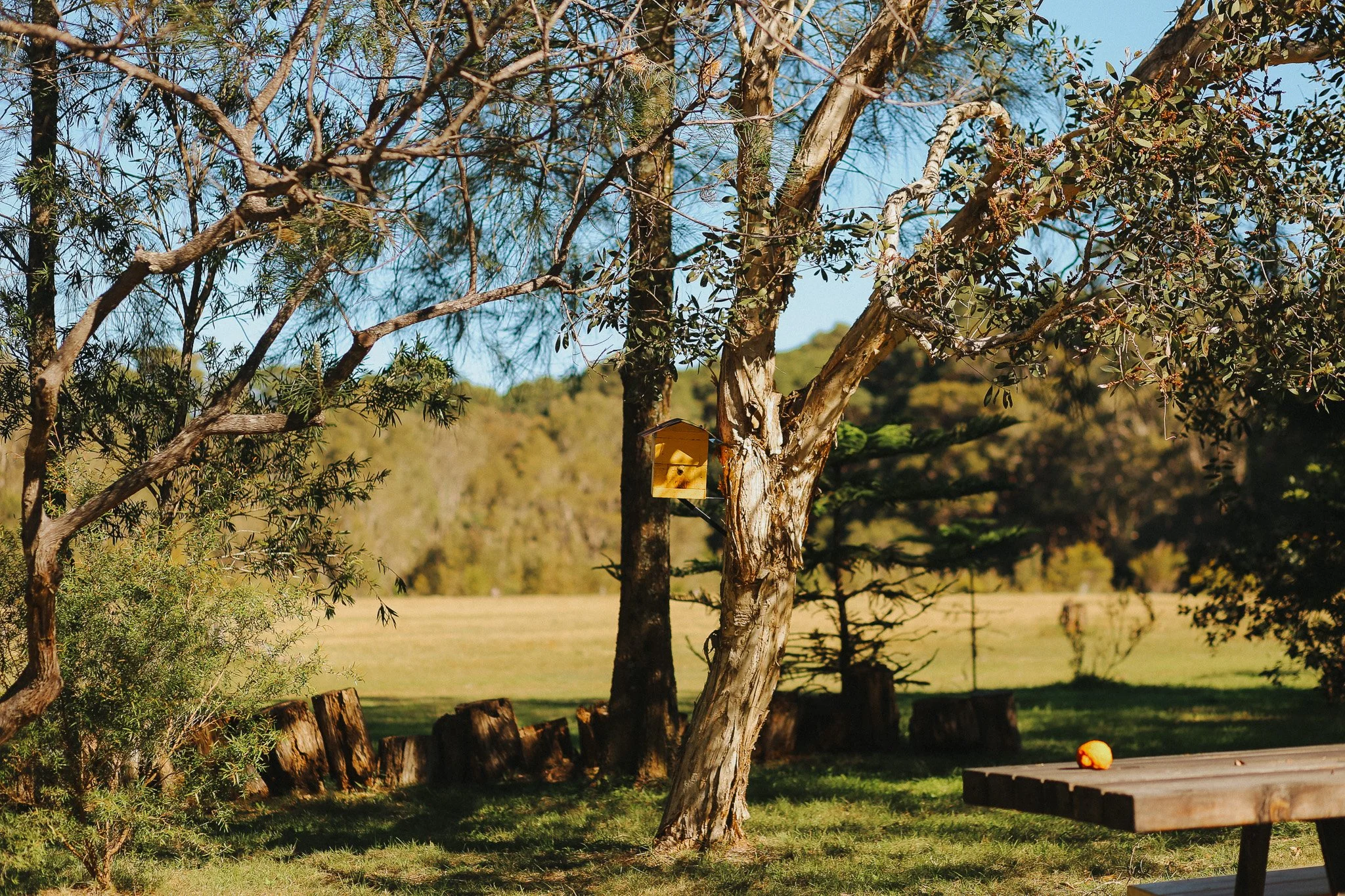
For now, our focus has shifted away harvesting honey. Instead, we are providing bait hives: safe, welcoming cavities where passing swarms can choose to establish a home.
We understand that they may not stay for long. Swarming is part of the honey bee’s natural cycle of reproduction and renewal. The brood break created through absconding can also interrupt the reproductive cycle of Varroa mite, helping reduce mite pressure within the colony.
If the bees choose to move on or swarm again, we allow them to follow their own rhythms. Our role is not to hold them here, but to offer shelter, abundant forage and a place of refuge for however long they choose to stay.
We are honoured to support the bees through this period of change as they adapt and find ways to live in greater balance with the mite.
This is an expression of our reverence for the bees: walking alongside them, continuing to observe and learn, and placing their autonomy and wellbeing ahead of our desire to harvest honey.
Australian Native Bees
We have the honour of working with Australia’s native bees.
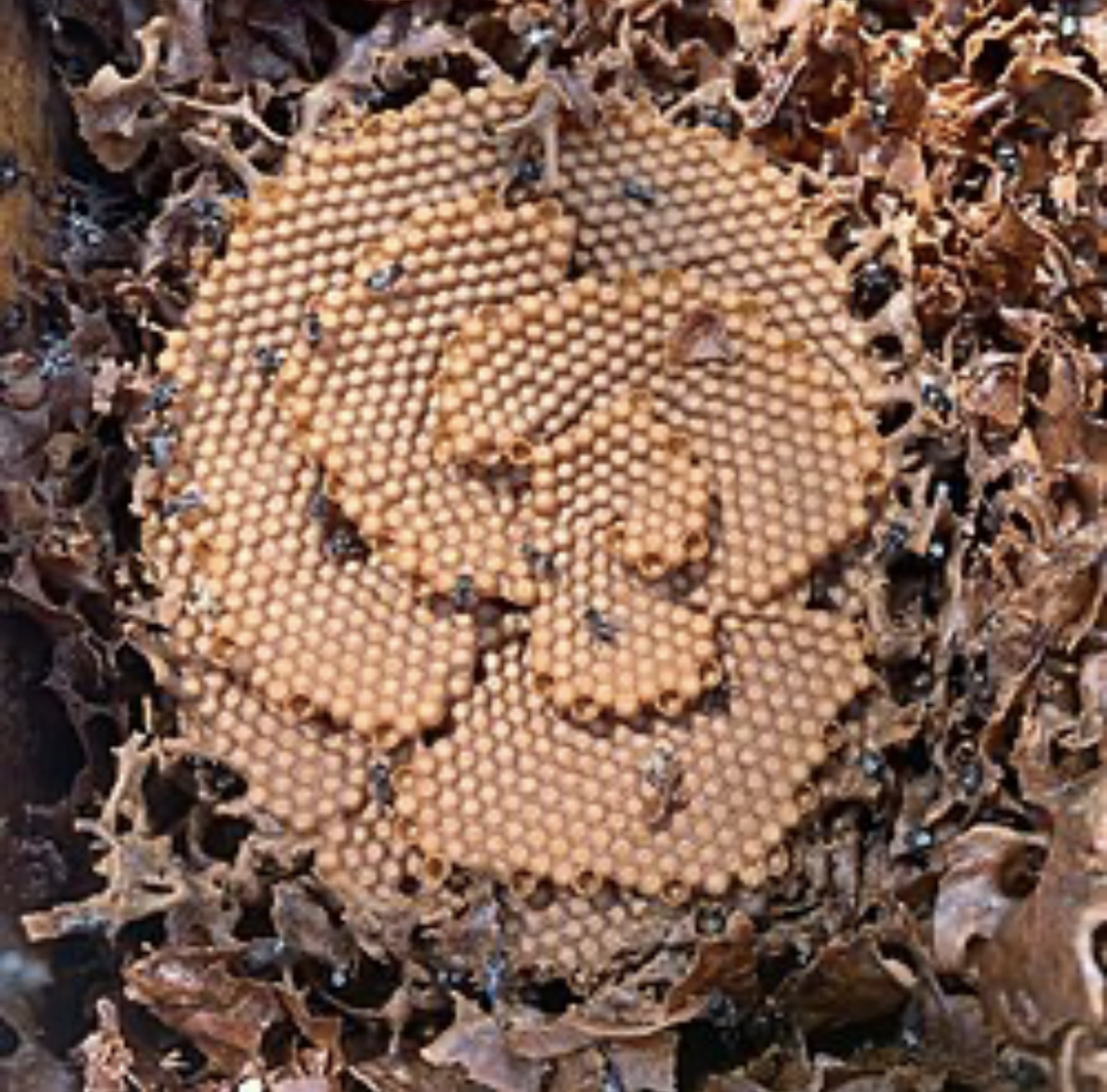
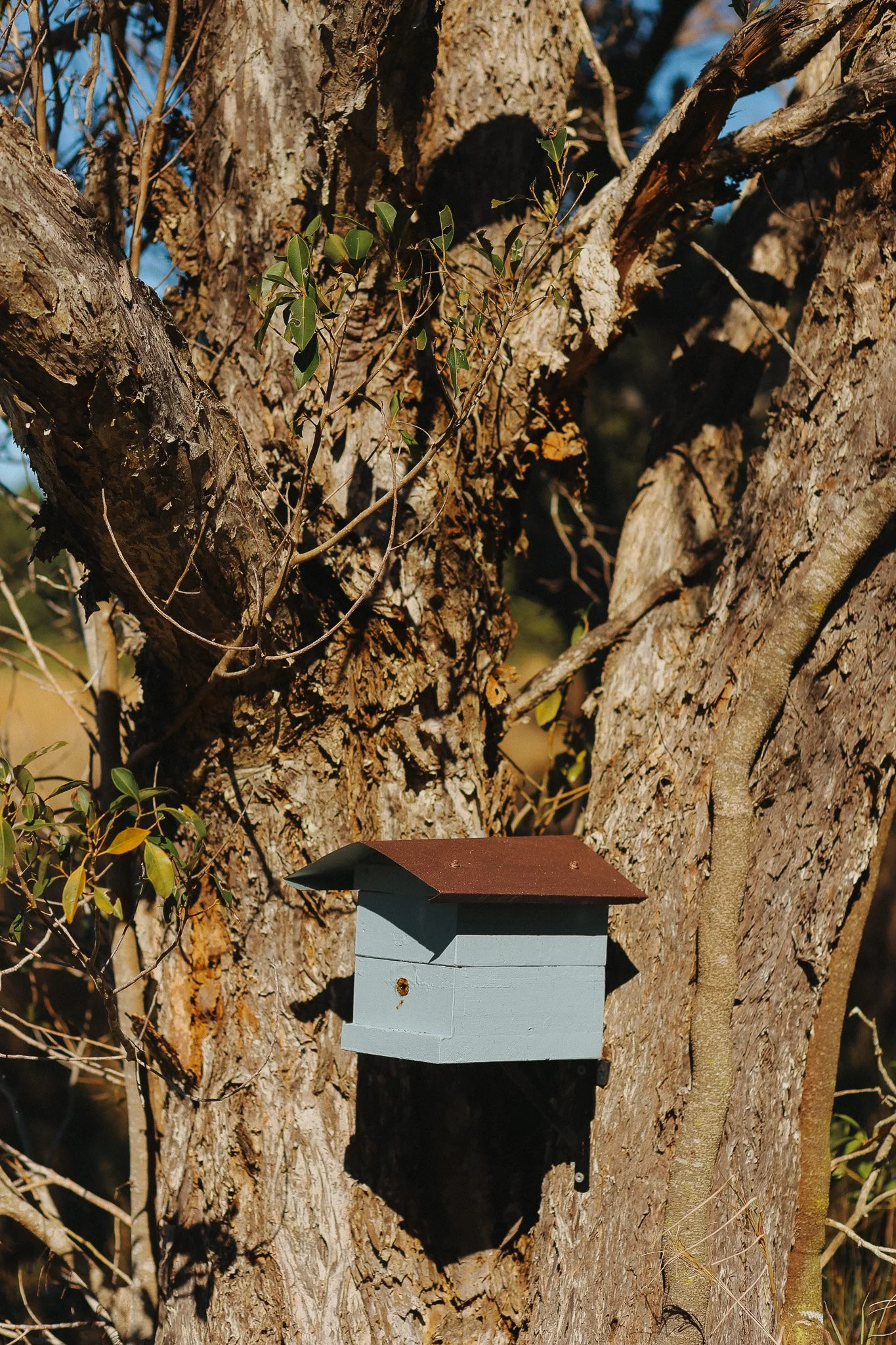
Today, River Hawk Bee Sanctuary is home to 55 native stingless bee colonies, and our sanctuary continues to grow.
Our primary focus is creating a landscape in which native bees can flourish. Alongside caring for our colonies of Tetragonula carbonaria, we are planting diverse native forage and restoring the habitat and nesting places that support Australia’s many social and solitary native bee species.
These little bees have become an important part of our understanding of reciprocity. They pollinate the landscape, support biodiversity and connect us more deeply with the ecology of this place. In return, we seek to provide them with abundant forage, safe nesting habitat and the freedom to live according to their own rhythms.
The more closely we observe them, the more they reveal about cooperation, resilience and the intelligence of the living world.
Ceremonial Native Bee Honey
Native stingless bees produce only a very small amount of honey, making it exceptionally rare and precious.
We have sought permission to co-create with the bees and harvest only a tiny amount with reverence. when a colony is strong, abundant and has more than enough for its own needs.
Rather than treating this honey as an everyday food, we honour it as a rare offering from the bees and the landscape: something to be taken slowly, intentionally and in gratitude.
This rare honey feels extraordinarily alive. carrying a luminous, high-vibrational quality that invites a deeper connection with the intelligence of nature.
It will become one of the ritual offerings of Lumen Silta: a bridge between the bees, the land and those who receive it.
River Hawk Bee Sanctuary
We work with bees in a spirit of reciprocity and reverence, tending their wellbeing and the landscapes that sustain them, and inviting others into a deeper relationship with bees and their honey.
What began with a few hives and a curiosity about bees has grown into a much deeper exploration of how humans and bees might live and work together. The more time we spent with the bees, the more we came to recognise each colony as a living superorganism, with its own rhythms, intelligence and needs. Inspired by bee guardians including Jacqueline Freeman and Sandira Belia, we developed a gentler and more intuitive way of working with bees—an approach we have come to call Conscious Beekeeping. At its heart is a simple question: What is best for the bees?
We practise what we call autonomous regard: recognising bees as living beings with their own agency and intelligence, rather than viewing a colony primarily through the lens of what it can provide for us.
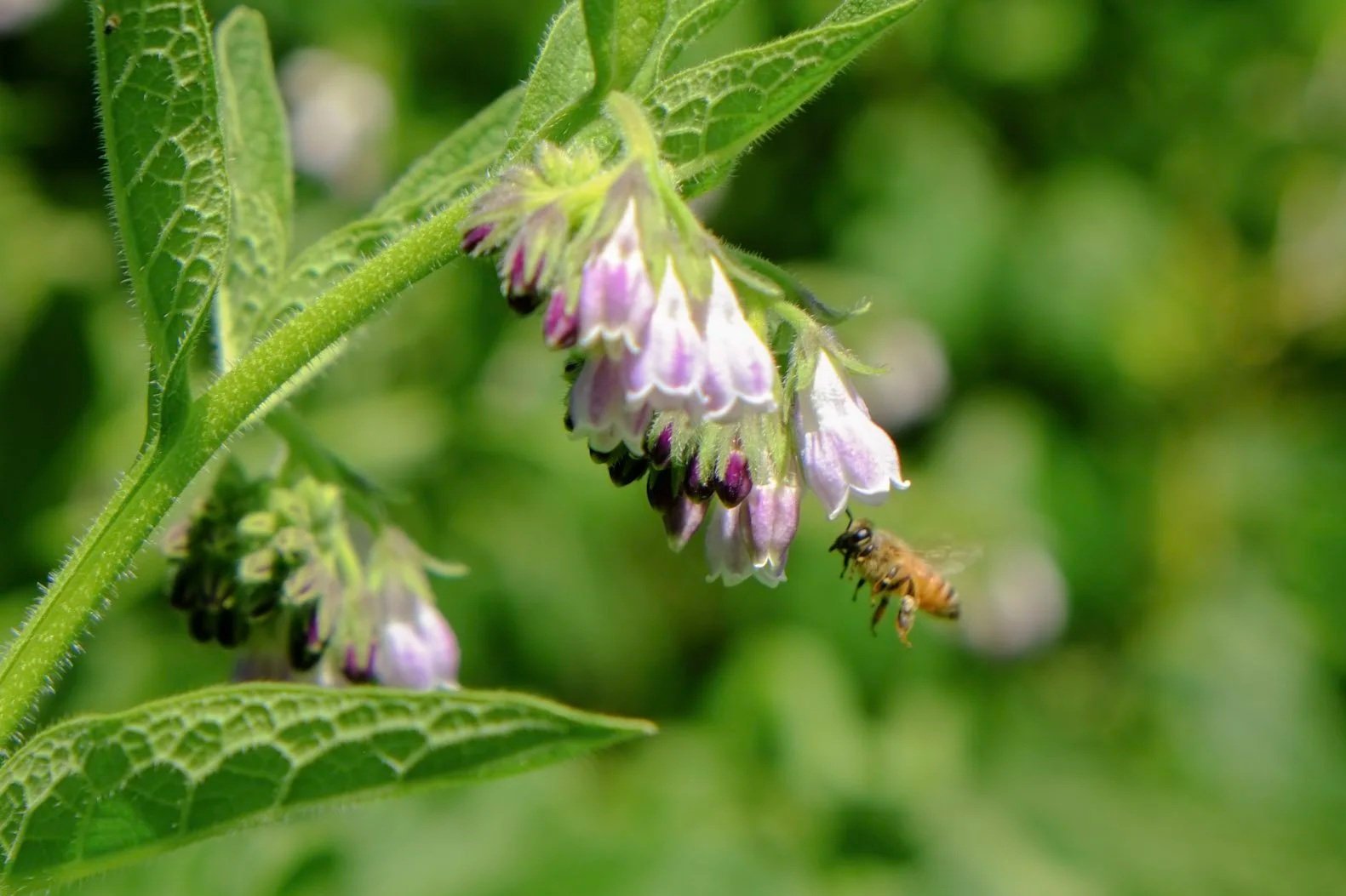
Our colonies remain here throughout the seasons, surrounded by diverse natural forage and the pollen-rich medicinal plants we grow for them. We use natural wooden hives, avoid chemicals in the hive and across the land, and intervene as little as possible.
When we receive honey, we ask permission and take only what a thriving colony can generously spare.
Just as importantly, we care for the landscape that sustains the bees. Their wellbeing is inseparable from the health of the soil, waterways, habitat and flowering plants around them.
The Bee Sanctuary is a living landscape shaped around the needs of bees and other pollinators.
The Bees Come First.
Everything we do begins with a simple question: What is best for the bees?
It’s a question that guides every decision we make.
At River Hawk Bee Sanctuary we practice the Art of Conscious Beekeeping.
We believe bees are not here to serve us, in fact they are our teachers.
The bees come first.
Everything else follows.